
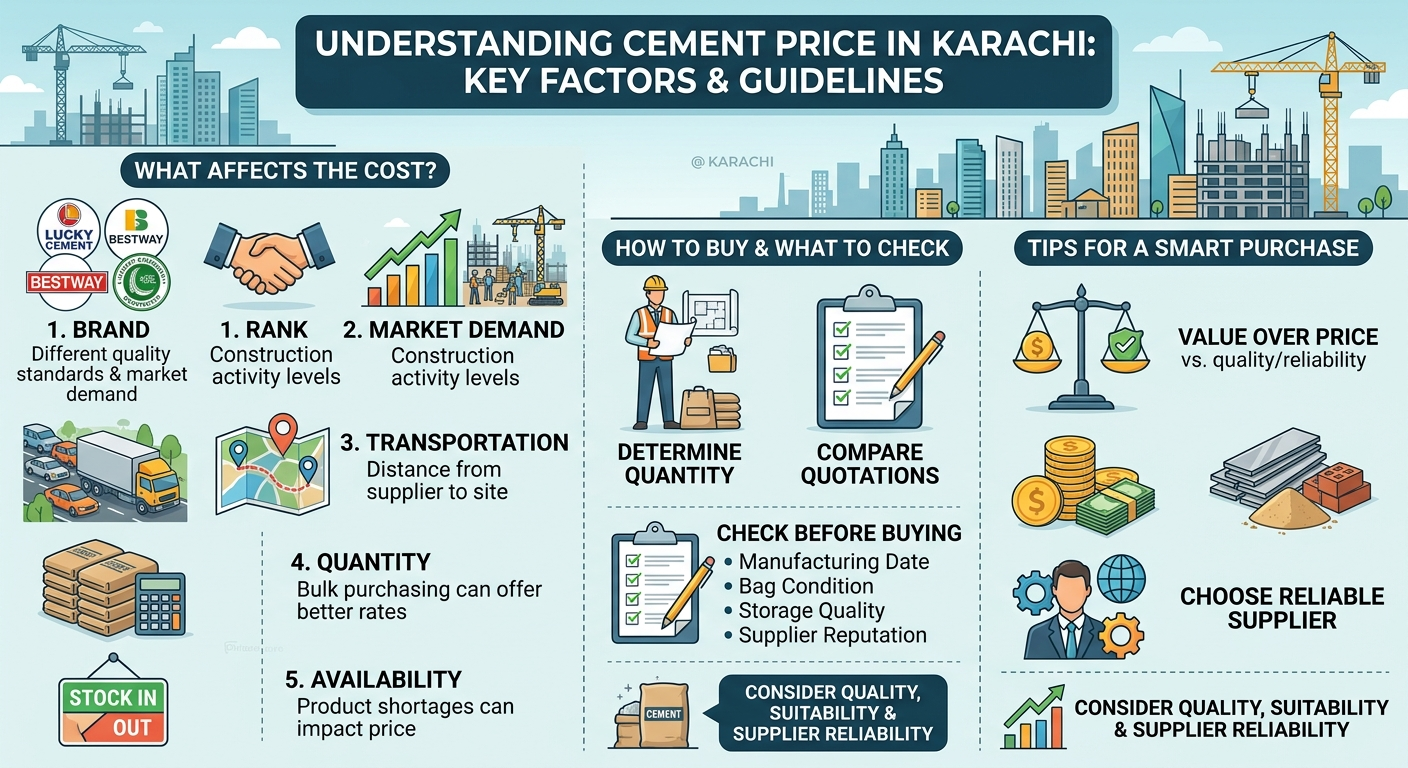
If you are planning construction in Karachi, one of the first things you will need to consider is the cost of construction materials. Cement is an essential material for foundations, columns, beams, slabs, masonry, plastering, and other construction work.

Choosing the right cement is one of the most important decisions when starting a construction project. Whether you are building a house, commercial property, boundary wall, or another structure, the quality of cement can…

Most construction and renovation projects need both cement and electrical cable at some point yet many contractors and builders end up sourcing them from two completely separate supply chains, with two separate relationships to manage.

Karachi’s mix of narrow industrial-zone yards, and spread-out suburban sites means cement delivery logistics aren’t one-size-fits-all. Choosing between bagged and bulk tanker supply can be the difference between a pour that happens on schedule and one that doesn’t.
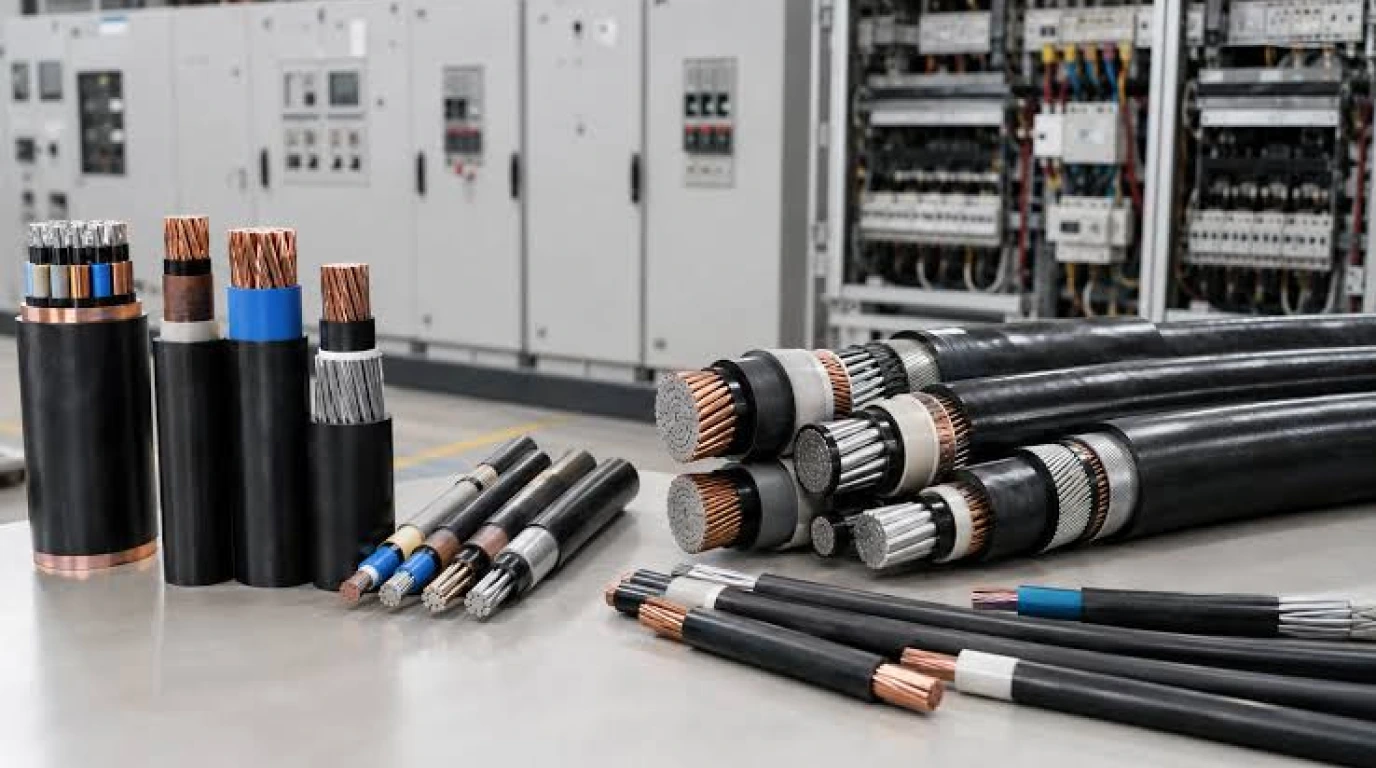
Procuring electrical cable for an industrial project is a different exercise than wiring a house. Load requirements are higher, lead times matter more, documentation gets checked, and a wrong specification can shut down a production line instead of just tripping a breaker.

Karachi has no shortage of cement suppliers but not all of them are equally reliable, and a wrong choice usually shows up at the worst possible time: mid-project, when a delivery doesn’t arrive or the bags on-site turn out to be inconsistent.

PSQCA the Pakistan Standards and Quality Control Authority is the government body responsible for setting and enforcing mandatory quality standards across a range of products sold in Pakistan, including certain categories of construction material and electrical cable.
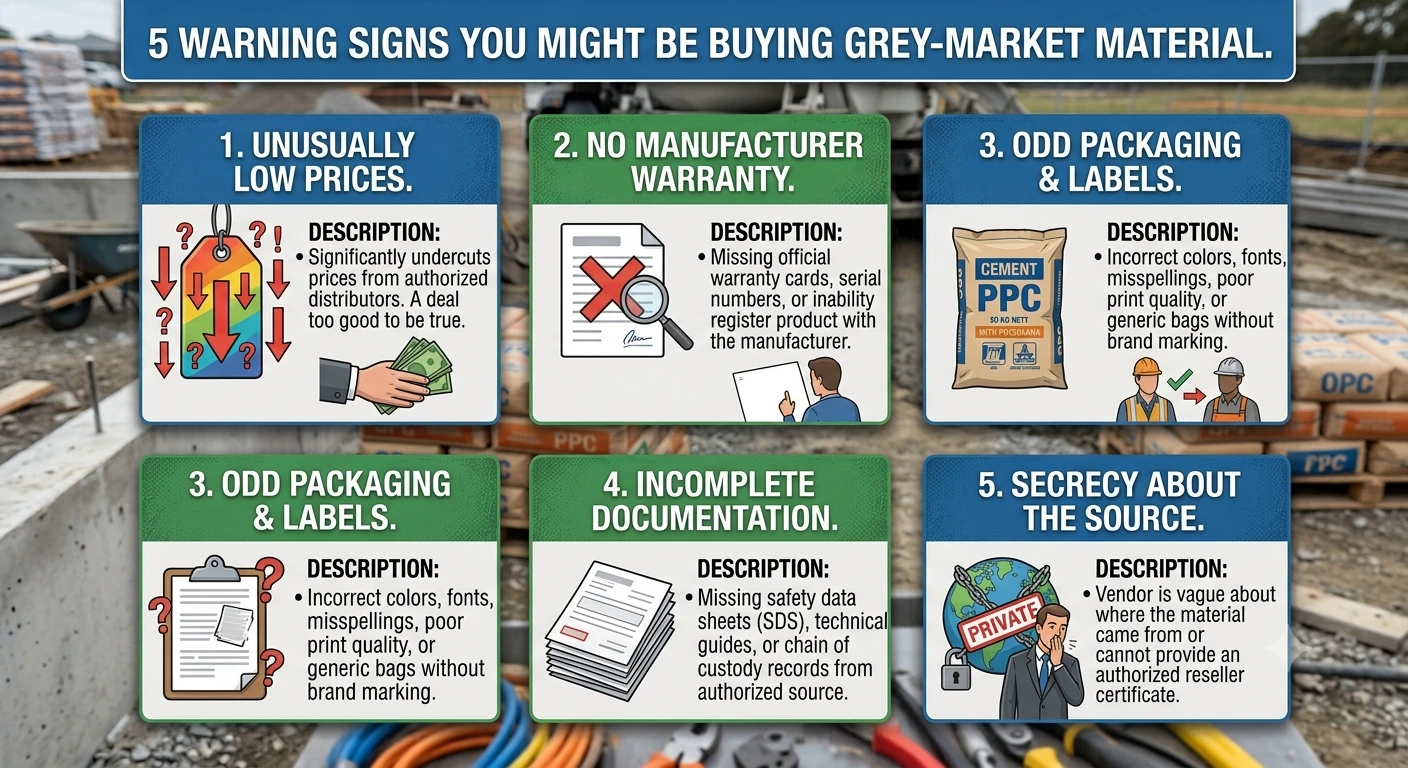
Grey-market and counterfeit construction material is a real problem in Pakistan’s supply chain cement and cable are common targets because both are bulky, hard for an untrained buyer to inspect closely, and expensive enough that a small price cut looks tempting.
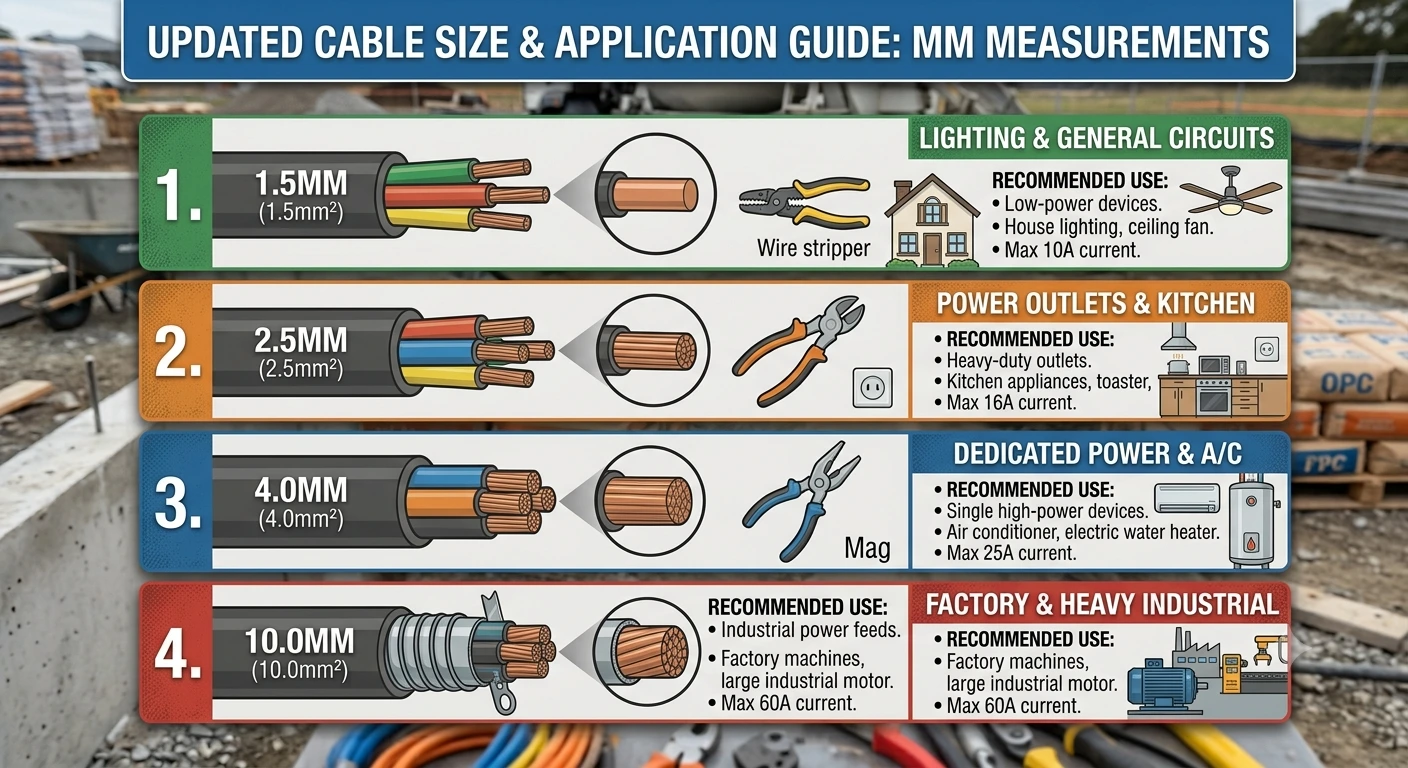
Cable gauge — the thickness of the conductor — determines how much current a wire can safely carry. Get it wrong in one direction and you waste money on an oversized cable; get it wrong in the other direction and you risk overheating, voltage drop, or a genuine fire hazard.
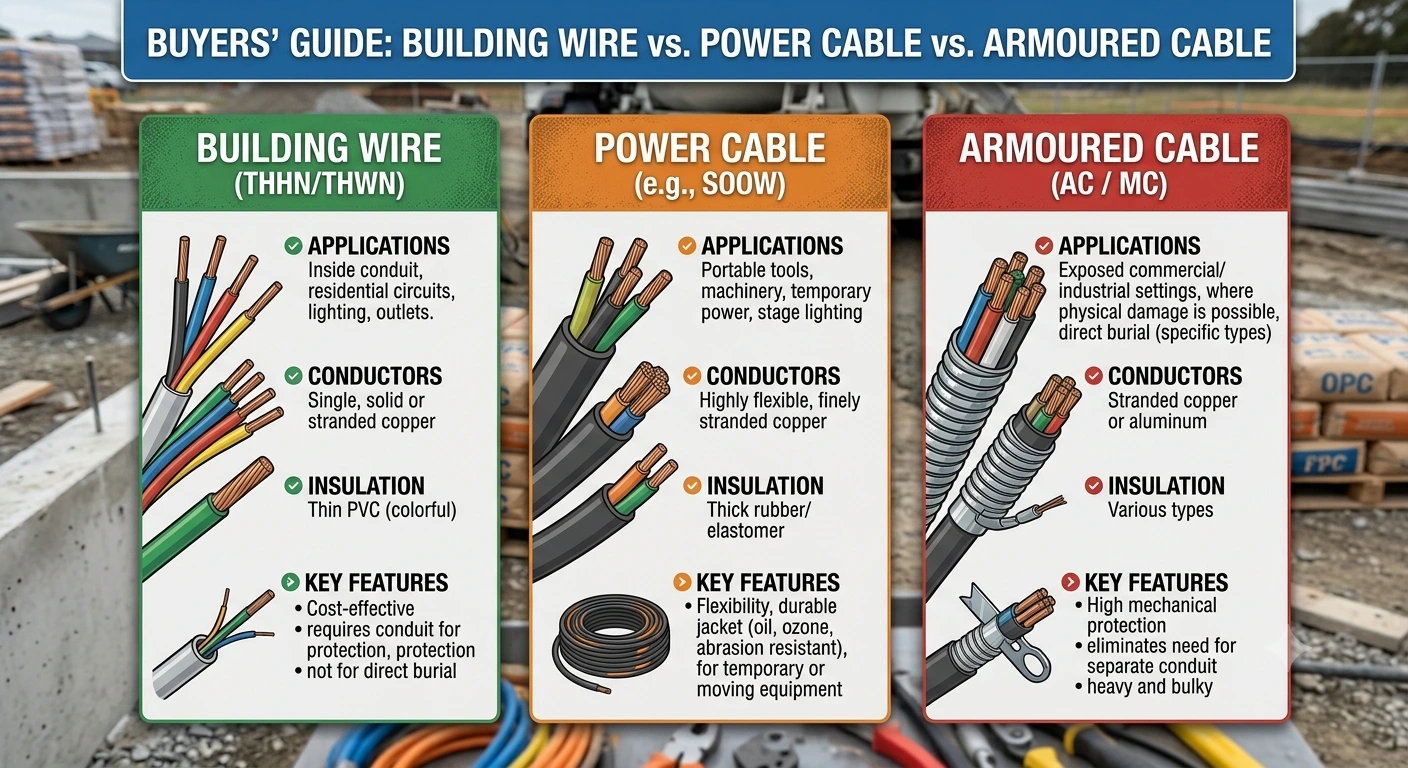
“Electrical cable” covers a wide range of genuinely different products, and mixing them up on a job — using building wire where armoured cable is needed, for instance — isn’t just inefficient, it can be a safety issue. Here’s what actually separates the main categories.