
Why Every Construction Project Needs a Trusted Cement and Electrical Cable Supplier
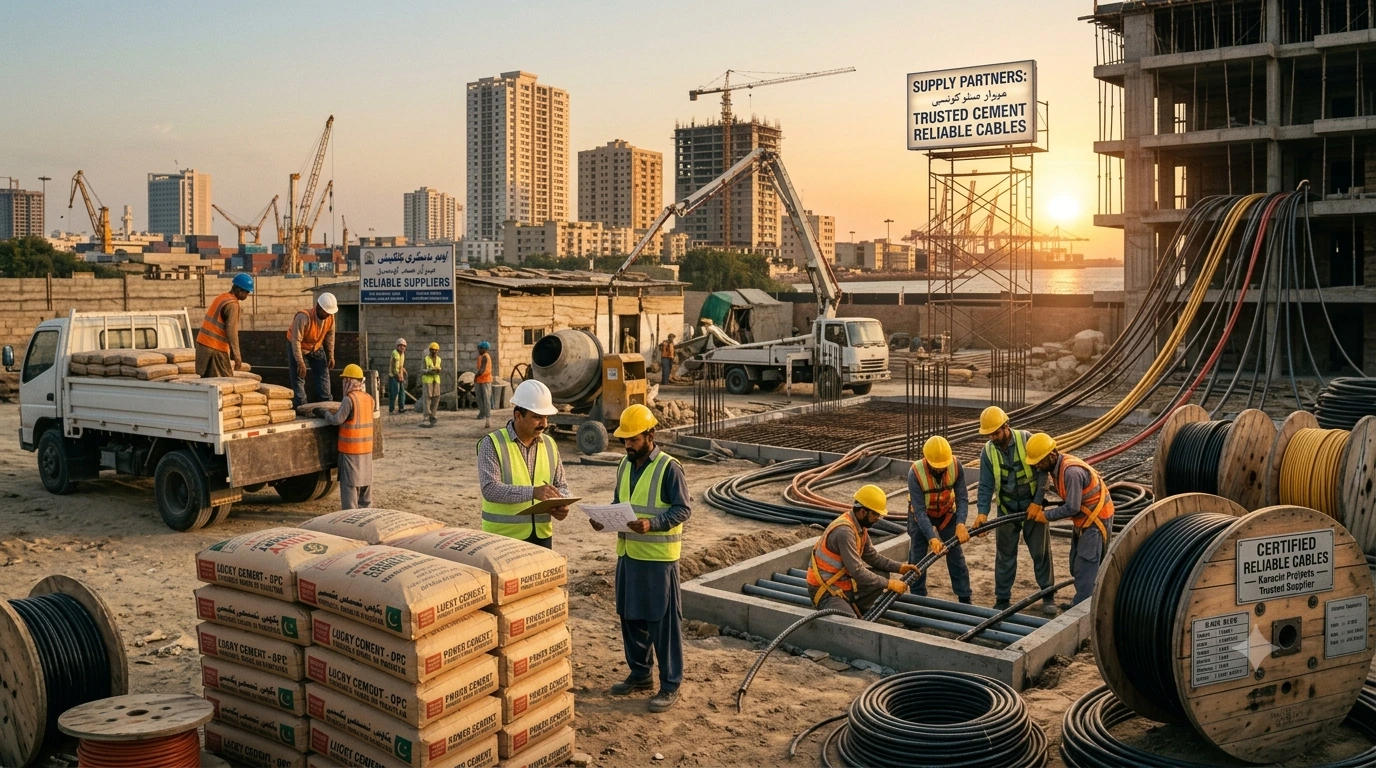
Most construction and renovation projects need both cement and electrical cable at some point yet many contractors and builders end up sourcing them from two completely separate supply chains, with two separate relationships to manage, two separate delivery schedules to track, and two separate places where something can go wrong. There’s a simpler way to run it.
Two Materials, Two Timelines, One Project
Cement and cable rarely get used at the exact same moment on a build, but they both sit on the critical path — a structural pour has to happen before wiring goes in, and a delay in either one pushes the whole schedule back. When both materials come from different suppliers with different lead times and different communication styles, coordinating the two becomes an extra job on top of actually running the project.
What A Single Supplier Actually Simplifies
Working with one supplier across both cement and cable doesn’t change the physics of construction — the cement still has to cure before the electrical rough-in — but it does remove a layer of coordination overhead. One point of contact, one account history, one delivery relationship to manage instead of two, and one place to escalate if something’s wrong with either material.
Consistency Of Quality Standard Across Materials
When cement comes from one uncertified reseller and cable from another, you’re trusting two separate, unrelated verification processes — and hoping both happen to be reliable. An authorized dealer running both divisions under one roof applies the same standard of sourcing and certification checking to everything they sell, regardless of which material it is.
Easier Budgeting And Bulk Negotiation
Projects that need meaningful volumes of both cement and Electrical cable are often in a stronger position to negotiate bulk pricing when both orders sit with the same supplier, rather than splitting purchasing power across two smaller, unrelated accounts.
Where This Actually Matters Most
This isn’t just theoretical — it plays out most clearly on mid-size residential and commercial builds, where the same site team is juggling structural work and electrical rough-in within a tight window, and every extra phone call or delivery coordination adds friction the project doesn’t need.
Separate suppliers vs one dual-division supplier
| Working With… | Typical Result |
|---|---|
| Separate cement-only and cable-only suppliers | Two schedules to manage, two relationships to coordinate |
| Uncertified, mixed suppliers | Risk of inconsistent quality across materials |
| One authorized dual-division supplier | Single point of contact, easier scheduling and escalation |
| One supplier, consistent certification standard | The same quality bar applied across the whole project |
Frequently Asked Questions
Q. Is it actually better to use one supplier for both cement and Electrical cable?
For many projects, yes — it simplifies scheduling and gives you one point of contact instead of coordinating two separate supply chains.
Q. Does S&S Enterprises supply both cement and cable?
Yes — we run both as dedicated divisions, each with its own certified sourcing and stock.
Q. Will using one supplier for both materials save money?
It can simplify logistics and delivery coordination, though pricing still depends on the specific brands, quantities, and products you order.
Need genuine cement or electrical cables?
Our team supplies genuine, certified cement and cable across Karachi and Sindh — tell us what you need and we’ll help you get it right the first time.
What Is PSQCA Certification, and Why Does It Matter?
PSQCA certification helps ensure that construction materials and electrical products sold in Pakistan meet national quality and safety standards. Whether you’re buying cement or electrical cables, understanding PSQCA certification can help you avoid counterfeit or substandard products.
What Certification Actually Confirms
A PSQCA mark or certification indicates that a product has been tested against a defined national standard covering things like material composition, dimensional accuracy, and safety-relevant performance — for cable, that can include insulation quality and current-carrying capacity; for cement, consistency in strength and composition.
Why It Matters For You As A Buyer
Certification is one of the more objective ways to separate genuine, standard-compliant stock from uncertified or counterfeit material — which matters because substandard cement or wiring isn’t just a quality issue, it’s a structural and electrical safety issue. Asking a supplier whether their stock is certified, and to which standard, is a reasonable and normal question — not an accusation.
Which Construction Products Require PSQCA Certification?
Many construction materials and electrical products sold in Pakistan must comply with applicable PSQCA standards. When purchasing cement or electrical cables, always confirm whether the specific product complies with the relevant national standard and request supporting documentation where appropriate.
What To Ask A Supplier
- Is this specific product certified, and against which standard?
- Can you show documentation, not just a verbal assurance?
- Is the manufacturer itself an authorized, traceable source?
What to ask, and why
| Question To Ask | Why It Matters |
|---|---|
| Is this product certified, and to which standard? | Confirms the specific product — not just the brand — meets a defined standard |
| Can you show documentation? | A verbal assurance isn’t verifiable; paperwork is |
| Is the manufacturer an authorized, traceable source? | Certification means little if the supply chain itself can’t be traced |
Frequently Asked Questions
Q. Does PSQCA certification apply to the brand or the specific product?
It applies to the specific product tested against the standard — which is why it’s worth asking whether the exact item you’re buying is certified, not just the brand name.
Q. Is asking about certification an unusual request?
No. It’s a reasonable and normal question — a supplier confident in their sourcing should be able to answer without hesitation.
Q. Why does certification matter more for cement and cable specifically?
Because substandard material in either category isn’t just a quality issue — it’s a structural or electrical safety issue.
Q. Is PSQCA certification mandatory?
Depending on the product category and applicable regulations, certain products must comply with PSQCA standards before they can be legally sold in Pakistan. Always verify certification for the specific product you are purchasing.
Need genuine cement or electrical cables?
Our team supplies genuine, certified cement and cable across Karachi and Sindh tell us what you need and we’ll help you get it right the first time.
5 Warning Signs You Might Be Buying Grey-Market Material
Grey market construction material is a growing concern in Pakistan. Counterfeit cement and electrical cables can lead to structural failures, electrical hazards, and costly project delays. Here are five warning signs to help you identify genuine construction materials before you buy.
1. A Price That Seems Too Good To Be True
Genuine manufacturer stock has a fairly consistent cost basis. If a quote comes in noticeably below the market rate for a known brand, that’s a signal to ask more questions, not to celebrate a good deal.
2. No Visible Batch Or Manufacturing Markings
Genuine cement bags and cable reels carry manufacturing batch codes, dates, or markings required for traceability. Missing, smudged, or inconsistent markings across a delivery are a red flag.
3. The Dealer Can’t Produce an Invoice or Certificate
An authorized dealer should be able to show a manufacturer invoice and, where applicable, a certification document. Hesitation or vague answers here are worth taking seriously.
4. Inconsistent Packaging Or Weight
Bags that feel noticeably lighter than standard 50kg, torn or re-sealed packaging, or cable reels with mismatched labeling between units in the same delivery all suggest the stock hasn’t come through a single verified supply chain.
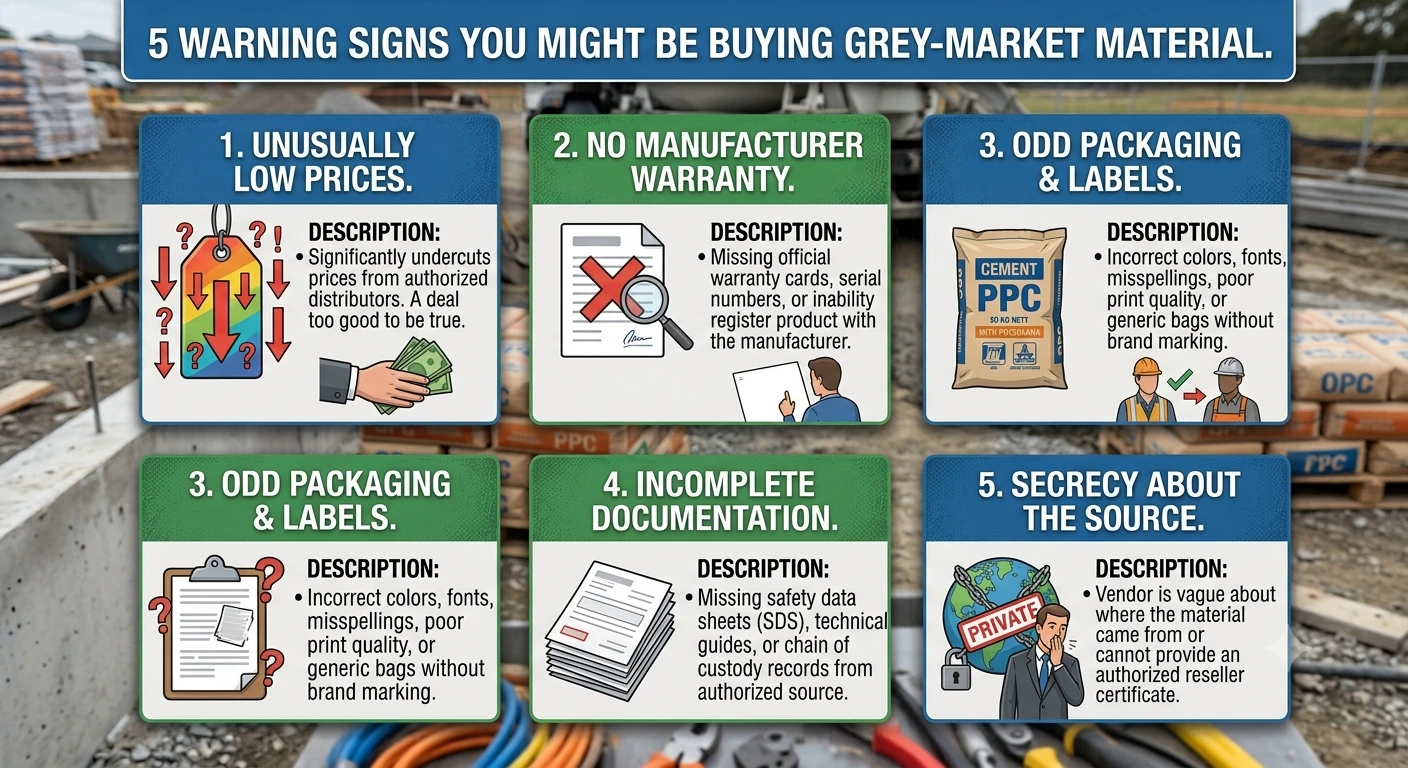
5. Reluctance To Let You Verify With The Manufacturer
A genuine authorized dealer has nothing to hide from a manufacturer verification call. If a supplier actively discourages you from confirming authenticity independently, treat that as a serious warning sign rather than an inconvenience. Purchasing from an authorized dealer greatly reduces the risk of receiving grey-market or counterfeit construction materials.
| Warning Sign | What It Usually Means |
|---|---|
| Price well below market rate | Stock may not have come through an authorized channel |
| Missing batch/manufacturing markings | Traceability back to the manufacturer is broken |
| No invoice or certificate on request | Dealer may not be an authorized source |
| Inconsistent bag weight or packaging | Possible tampering or mixed, unverified stock |
| Reluctance to allow manufacturer verification | A supplier confident in their sourcing has nothing to hide |
Frequently Asked Questions
Q. Is a lower price always a sign of grey-market material?
Not always, but a quote noticeably below the market rate for a known brand is worth questioning rather than accepting at face value.
Q. What documentation should a genuine dealer be able to provide?
A manufacturer invoice and, where applicable, a certification document — an authorized dealer should be able to produce these without hesitation.
Q. Can I verify authenticity directly with the manufacturer?
Yes, and a genuine authorized dealer should have no issue with you doing so. Reluctance to allow this is itself a warning sign.
Need genuine cement or electrical cables?
Our team supplies genuine, certified cement and cable across Karachi and Sindh — tell us what you need and we’ll help you get it right the first time.