
Electrical Cable Supply for Industrial Projects: A Procurement Guide
Procuring electrical cable for an industrial project in Pakistan requires more than comparing prices. Load requirements, certifications, lead times and supplier reliability all play a major role in project success.Choosing a reliable industrial electrical cable supplier ensures consistent product quality, technical support and dependable delivery schedules.
Match The Cable Type To The Actual Load
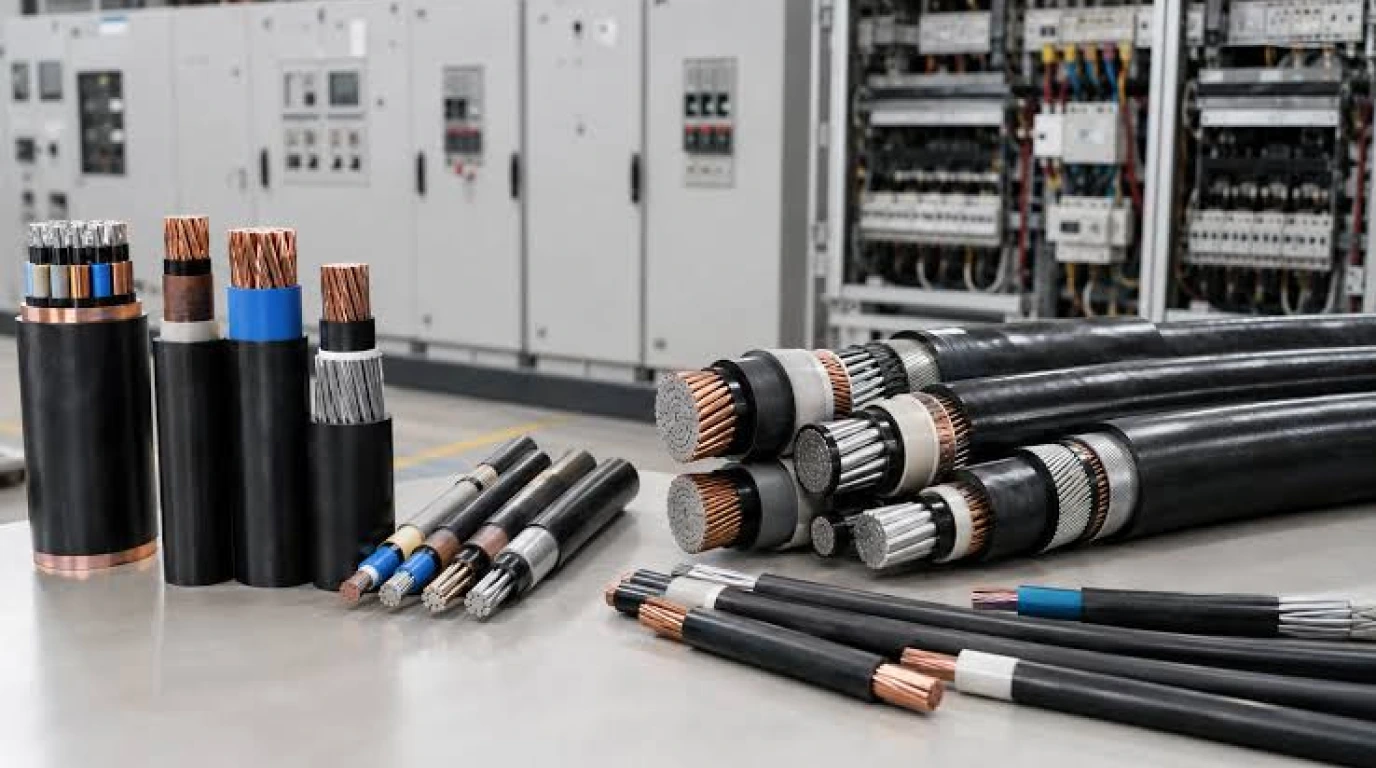
Industrial environments typically call for power cable and armoured cable rather than standard building wire — heavier machinery, longer distribution runs, and harsher physical conditions all demand a cable built for the load and the environment, not just the voltage on paper. Getting this wrong early tends to surface later as nuisance tripping, overheating, or premature cable failure.
Plan For Lead Time On Bulk Orders
Industrial and commercial electrical projects rarely need a single coil they need drums, custom lengths, and consistent supply across a project timeline. A supplier who can’t tell you a realistic lead time on bulk cable is a supplier who will eventually cost you a delayed installation schedule. For industrial projects in Karachi, choosing a supplier with readily available stock can significantly reduce installation delays.
Get The Technical Documentation Up Front
Industrial buyers usually need more than a verbal spec — insulation type, conductor material, current rating, and standard compliance should all be confirmed on paper before the cable is installed, not discovered afterward during an inspection or compliance review.
Confirm Certification Against PSQCA And IEC Standards
Certified cable isn’t just a quality nicety in an industrial setting — it’s often a genuine safety and compliance requirement. Ask your supplier which standard each cable type is certified against, and don’t accept a vague “yes, it’s certified” without the documentation behind it.
Common Mistakes When Buying Industrial Cables
- Choosing price over certification
- Ordering incorrect cable size
- Ignoring delivery schedules
- Buying from uncertified suppliers
Coordinate Specs With Your Electrical Contractor
A surprising number of on-site delays come down to a mismatch between what procurement ordered and what the electrical contractor actually specified. Loop your contractor or site electrician into the cable spec before ordering — it’s a five-minute conversation that prevents a very expensive re-order.
Industrial cable procurement at a glance
| Consideration | Why It Matters For Industrial Buyers |
|---|---|
| Cable type and rating | Must match the actual load, voltage, and environment |
| Lead time on bulk orders | Industrial timelines rarely absorb delivery delays well |
| Technical documentation | Needed for compliance sign-off and future inspections |
| PSQCA / IEC certification | Confirms the cable meets safety and performance standards |
| Coordination with contractors | Avoids mismatched specs discovered on-site |
Frequently Asked Questions
Q. What’s the biggest difference between industrial and residential cable procurement?
Volume, lead-time sensitivity, and documentation — industrial buyers typically need certified specs and reliable bulk delivery timelines that residential orders don’t require.
Q. Do I need different cable for industrial machinery than for office wiring?
Yes — machinery and heavy industrial loads generally require power or control cable rather than standard building wire.
Q.Which cable is best for industrial applications?
The right cable depends on voltage, load, installation conditions and environmental factors. Industrial projects commonly use power, armoured and control cables that meet PSQCA or IEC standards.
Q. How far in advance should I order cable for an industrial project?
It depends on quantity and cable type, but ordering with a buffer ahead of your installation schedule helps avoid delays from stock or dispatch timing.
Need genuine cement or electrical cables?
Our team supplies genuine, certified cement and cable across Karachi and Sindh — tell us what you need and we’ll help you get it right the first time.
How to Choose the Right Cable Gauge for Home Wiring
Choosing the right cable gauge for home wiring is essential for electrical safety and reliable performance. The correct cable size depends on current load, cable length, insulation type, and installation conditions. Understanding these factors helps prevent overheating, voltage drop, and unnecessary costs.
What Determines The Right Gauge?
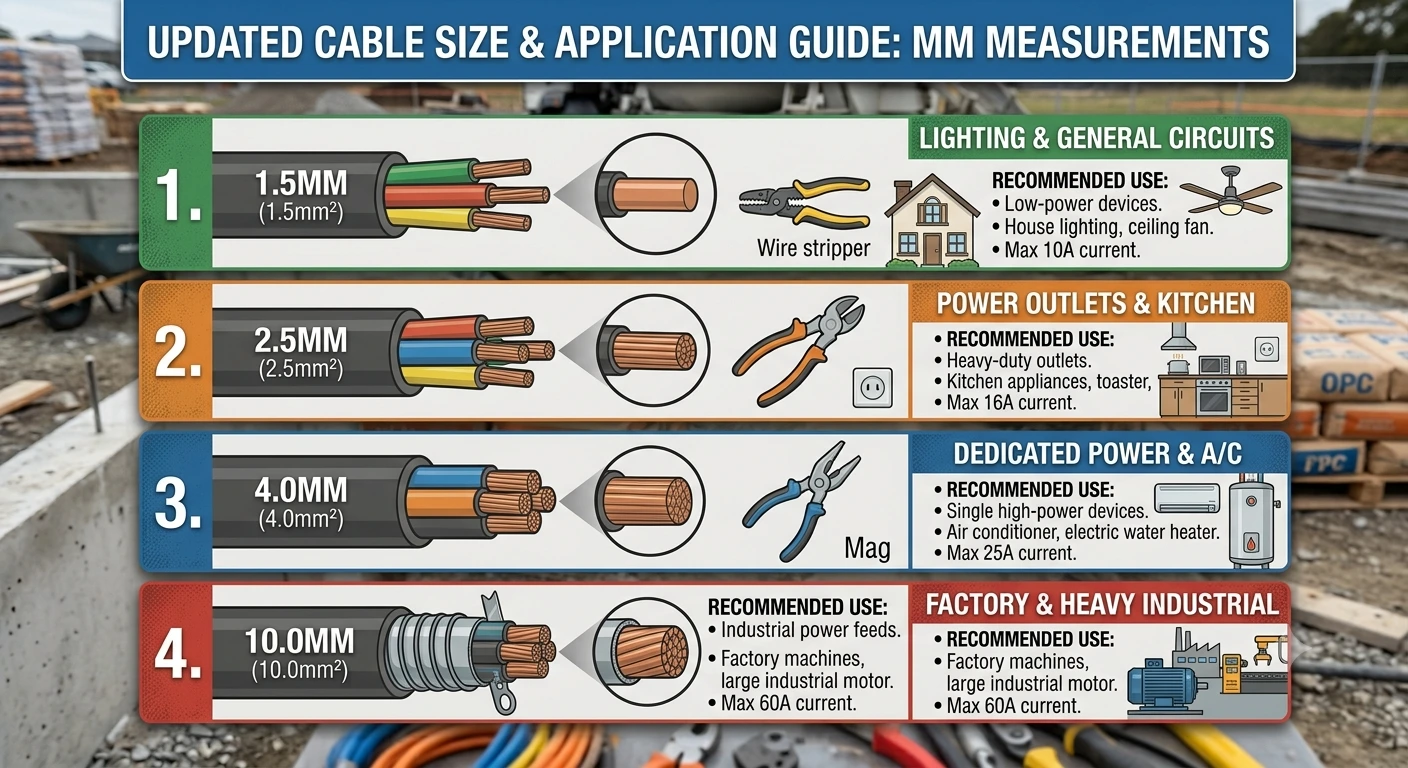
Several factors combine to determine the correct size: the current load of the circuit (what’s actually plugged in or wired to it), the length of the cable run (longer runs need thicker conductors to limit voltage drop), the insulation type, and the ambient installation conditions. A wire that’s correctly sized for a short lighting circuit may be undersized for a long run feeding an air-conditioning unit.
Common Mistakes People Make
- Using the same gauge for every circuit in a house regardless of load.
- Ignoring cable run length when a circuit runs a long distance from the distribution board.
- Assuming a thicker gauge is always “safer” without checking it matches the breaker rating — mismatches can defeat the point of circuit protection
Why Using the Wrong Cable Gauge Is Dangerous
An undersized cable can overheat, damage connected equipment, trip breakers, or create a fire hazard. Oversized cables may increase costs unnecessarily without improving safety when the electrical design is correct.
Always Confirm With A Licensed Electrician
Because incorrect sizing is a genuine safety risk, we don’t publish a one-size-fits-all gauge chart — local wiring regulations, circuit design, and load calculations should come from a licensed electrician who can assess your specific installation. Once you know the size and type your electrician has specified, our team can help you source the exact cable in the right quantity.
Factors that influence gauge selection
| Factor | Why It Matters |
|---|---|
| Current load | Higher-draw circuits (e.g. AC units) need thicker conductors than lighting circuits |
| Cable run length | Longer runs increase voltage drop, which can require a larger gauge to compensate |
| Insulation type | Different insulation ratings change how much current a given gauge can safely carry |
| Ambient conditions | Heat, enclosure, and grouping with other cables affect safe current-carrying capacity |
Frequently Asked Questions
Q. Why doesn’t this guide give exact gauge numbers?
Because incorrect sizing is a genuine safety risk, and the correct gauge depends on your specific load, run length, and local wiring regulations — that assessment should come from a licensed electrician, not a generic chart.
Q. Is a thicker gauge always the safer option?
Not automatically. A gauge that doesn’t match your breaker rating can defeat the point of circuit protection, so “thicker” isn’t a safe substitute for a proper calculation.
Q. What should I do once my electrician specifies a gauge?
Once you have the size and type confirmed, our team can help you source the exact cable in the right quantity.
Q. Can I use the same cable gauge for every room?
No. Different circuits have different electrical loads. Lighting, sockets, air conditioners, and other appliances may require different cable sizes based on the electrical design and applicable wiring standards.
Need genuine cement or electrical cables?
Our team supplies genuine, certified cement and cable across Karachi and Sindh — tell us what you need and we’ll help you get it right the first time.
Building Wire vs Power Cable vs Armoured Cable: A Buyer’s Guide
“Electrical cable” covers a wide range of genuinely different products, and mixing them up on a job — using building wire where armoured cable is needed, for instance — isn’t just inefficient, it can be a safety issue. Here’s what actually separates the main categories.
Building Wire
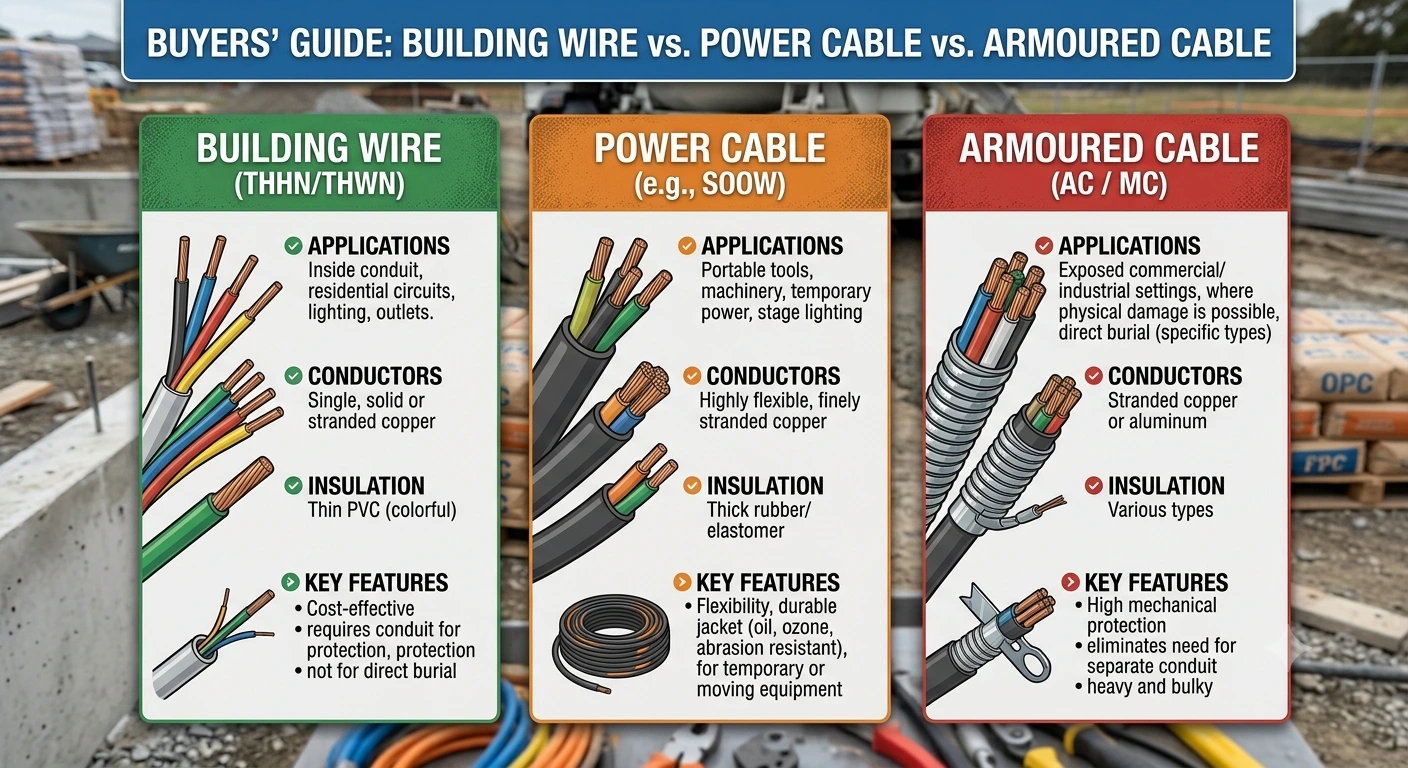
Building wire is flexible, PVC-insulated copper wire designed for standard indoor circuits — lighting, sockets, and general household or office wiring. It’s not designed for direct burial or heavy mechanical exposure; it belongs inside conduit or trunking, indoors or in protected runs.
Power Cable
Power cable uses heavier-gauge conductors built to carry higher current loads across commercial and industrial distribution — feeding panels, larger equipment, or distribution boards where building wire’s current capacity would be insufficient or unsafe.
Armoured Cable
Armoured cable adds a steel-wire layer beneath the outer sheath, giving it mechanical protection that building wire and standard power cable don’t have. That makes it the right choice for underground runs, outdoor installations, and anywhere the cable is exposed to physical stress, digging, or rodent damage.
Control Cable
Control cable is a shielded, multicore cable used for low-voltage signal and instrumentation wiring — connecting sensors, control panels, and automation equipment where interference and signal clarity matter more than raw current capacity.
Quick Decision Guide
- Standard indoor wiring: Building Wire
- Heavy loads, panels, distribution: Power Cable
- Underground or outdoor runs: Armoured Cable
- Signal, sensors, PLC panels: Control Cable
Cable types at a glance
| Type | Best For | Mechanical Protection | Typical Location |
|---|---|---|---|
| Building Wire | Lighting, sockets | Low — needs conduit | Indoor, protected runs |
| Power Cable | Panels, heavy loads | Moderate | Indoor / protected commercial runs |
| Armoured Cable | Underground, outdoor | High — steel-wire armour | Buried, outdoor, exposed runs |
| Control Cable | Signal, sensors, PLCs | Shielded for interference | Control panels, automation |
Frequently Asked Questions
Q. Can building wire be buried underground?
No. Standard building wire is not designed for direct burial or heavy mechanical exposure — armoured cable is the correct choice for underground runs.
Q. What makes armoured cable different from power cable?
Armoured cable adds a steel-wire layer beneath the outer sheath for mechanical protection, which standard power cable doesn’t have — that’s what makes it suitable for burial and outdoor exposure.
Q. Why does control cable matter for automation projects?
It’s shielded to reduce interference, which protects signal clarity for sensors and control panels — something raw current-carrying capacity doesn’t address.
Need genuine cement or electrical cables?
Our team supplies genuine, certified cement and cable across Karachi and Sindh — tell us what you need and we’ll help you get it right the first time.