
How to Choose the Right Cable Gauge for Home Wiring
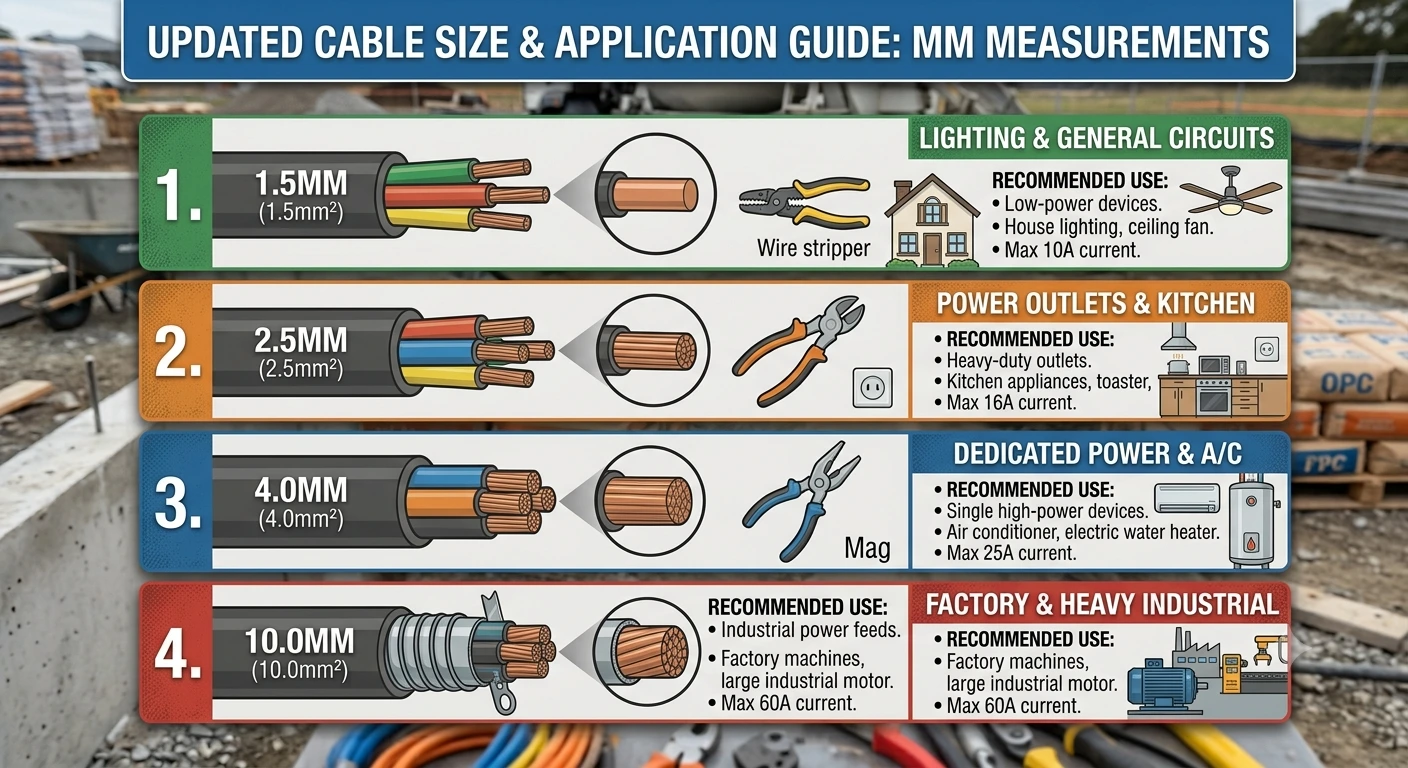
Choosing the right cable gauge for home wiring is essential for electrical safety and reliable performance. The correct cable size depends on current load, cable length, insulation type, and installation conditions. Understanding these factors helps prevent overheating, voltage drop, and unnecessary costs.
What Determines The Right Gauge?
Several factors combine to determine the correct size: the current load of the circuit (what’s actually plugged in or wired to it), the length of the cable run (longer runs need thicker conductors to limit voltage drop), the insulation type, and the ambient installation conditions. A wire that’s correctly sized for a short lighting circuit may be undersized for a long run feeding an air-conditioning unit.
Common Mistakes People Make
- Using the same gauge for every circuit in a house regardless of load.
- Ignoring cable run length when a circuit runs a long distance from the distribution board.
- Assuming a thicker gauge is always “safer” without checking it matches the breaker rating — mismatches can defeat the point of circuit protection
Why Using the Wrong Cable Gauge Is Dangerous
An undersized cable can overheat, damage connected equipment, trip breakers, or create a fire hazard. Oversized cables may increase costs unnecessarily without improving safety when the electrical design is correct.
Always Confirm With A Licensed Electrician
Because incorrect sizing is a genuine safety risk, we don’t publish a one-size-fits-all gauge chart — local wiring regulations, circuit design, and load calculations should come from a licensed electrician who can assess your specific installation. Once you know the size and type your electrician has specified, our team can help you source the exact cable in the right quantity.
Factors that influence gauge selection
| Factor | Why It Matters |
|---|---|
| Current load | Higher-draw circuits (e.g. AC units) need thicker conductors than lighting circuits |
| Cable run length | Longer runs increase voltage drop, which can require a larger gauge to compensate |
| Insulation type | Different insulation ratings change how much current a given gauge can safely carry |
| Ambient conditions | Heat, enclosure, and grouping with other cables affect safe current-carrying capacity |
Frequently Asked Questions
Q. Why doesn’t this guide give exact gauge numbers?
Because incorrect sizing is a genuine safety risk, and the correct gauge depends on your specific load, run length, and local wiring regulations — that assessment should come from a licensed electrician, not a generic chart.
Q. Is a thicker gauge always the safer option?
Not automatically. A gauge that doesn’t match your breaker rating can defeat the point of circuit protection, so “thicker” isn’t a safe substitute for a proper calculation.
Q. What should I do once my electrician specifies a gauge?
Once you have the size and type confirmed, our team can help you source the exact cable in the right quantity.
Q. Can I use the same cable gauge for every room?
No. Different circuits have different electrical loads. Lighting, sockets, air conditioners, and other appliances may require different cable sizes based on the electrical design and applicable wiring standards.
Need genuine cement or electrical cables?
Our team supplies genuine, certified cement and cable across Karachi and Sindh — tell us what you need and we’ll help you get it right the first time.