
Cement Grades Explained: What Does Grade 43 vs Grade 53 Actually Mean?
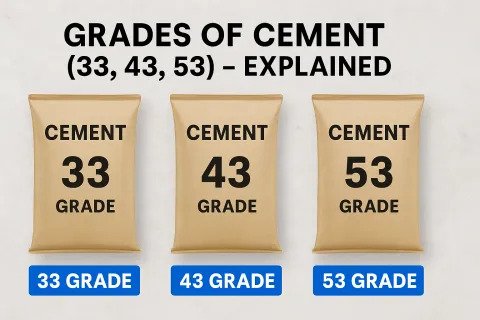
Cement grades such as Grade 43 and Grade 53 often confuse first-time buyers. This guide explains cement grades, what the numbers mean, and how to choose the right one for your project.
What Do Cement Grades Mean?
The grade number refers to the minimum compressive strength the cement achieves after 28 days of curing, measured in megapascals (MPa) on a standard cement mortar cube. Grade 43 cement reaches a minimum of 43 MPa; Grade 53 reaches at least 53 MPa. Higher grade means the hardened cement can withstand more compressive load before failing.
Grade 43 — Typical Uses
Grade 43 is a workhorse grade for general construction — residential buildings, plastering, boundary walls, and low-to-mid-rise structures where the design doesn’t call for exceptionally high load-bearing capacity.
Grade 53 — Typical Uses
Grade 53 is specified where the structural design demands higher early and ultimate strength — multi-storey RCC frames, heavily loaded columns and slabs, precast elements, and infrastructure work where a higher-strength mix reduces the amount of cement needed per cubic metre of concrete.
Does Higher Grade Always Mean Better?
Not necessarily. Grade 53 typically costs more, and using it where it isn’t structurally required is simply an unnecessary expense the design, not the marketing, should decide the grade. If you have a structural drawing or BOQ, it will usually specify the required grade directly; if you don’t, it’s worth checking with your engineer before ordering rather than defaulting to “the strongest one.”
Grade 43 vs Grade 53
| Grade | Min. 28-Day Strength | Typical Use |
|---|---|---|
| Grade 43 | 43 MPa | Homes, plaster, boundary walls, low-to-mid-rise structures |
| Grade 53 | 53 MPa | Multi-storey RCC frames, heavy columns/slabs, precast, infrastructure |
Frequently Asked Questions
Q. Is Grade 53 always the safer choice?
No. Safety comes from following the structural design, not from over-specifying. Using Grade 53 where 43 is called for adds cost without adding structural benefit.
Q. Where do I find the required grade for my project?
Your structural drawing or Bill of Quantities (BOQ) will normally state it directly. If you don’t have one, check with your engineer before ordering. Once you’ve identified the required grade, choose a trusted cement supplier that stocks genuine certified products.
Q. Does grade affect curing time?
Both grades follow a similar curing timeline; the 28-day figure is the standard benchmark used to classify strength, not a deadline for construction to wait.
Need genuine cement or electrical cables?
Our team supplies genuine, certified cement and cable across Karachi and Sindh — tell us what you need and we’ll help you get it right the first time.